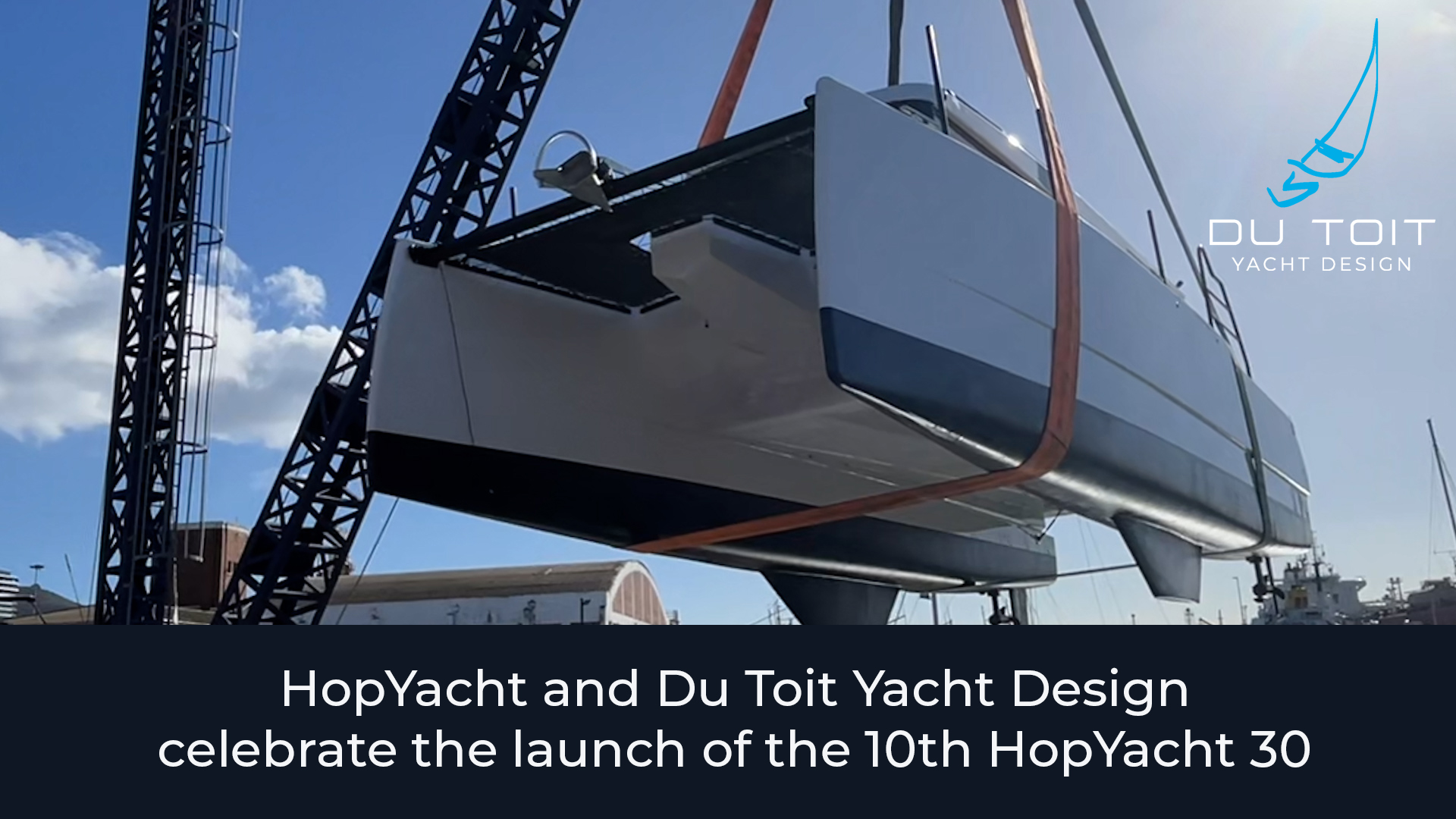
A milestone launch in Cape Town Cape Town, South Africa: HopYacht has launched Hull 10…
Aluminium yacht construction: designing for strength, flexibility and real ocean use
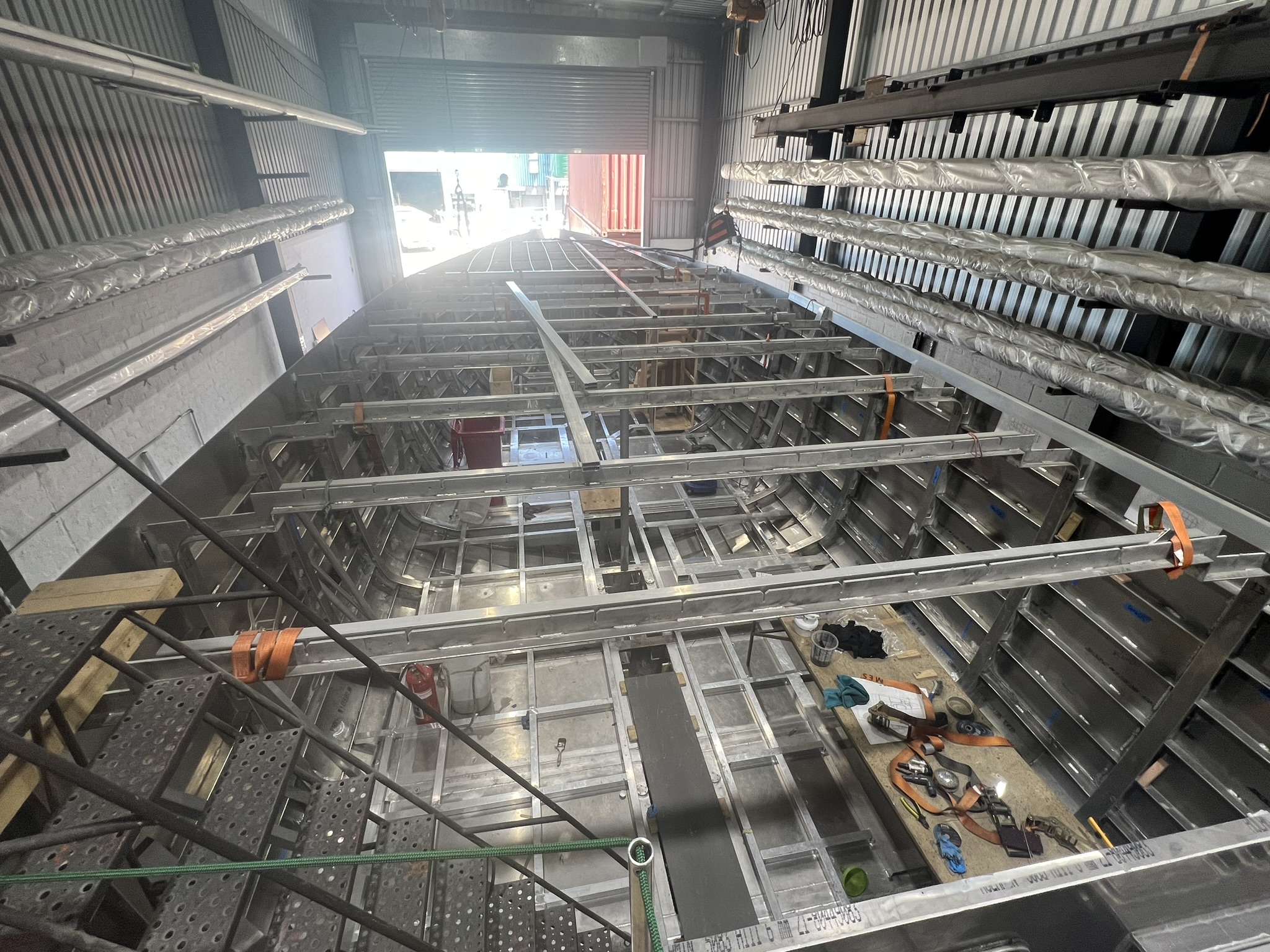
As the first Askari 65 Long Range Cruiser approaches launch, there is a quiet significance to what is taking shape in the final stages of production. This is not a conventional mass production yacht. Designed by Du Toit Yacht Design and built by Askari Yachts in Cape Town, the Askari 65 is a 65-foot aluminium long-range power cruiser created for owners who want range, comfort, individuality and genuine offshore capability.
The Askari 65 Long Range Cruiser is designed around an efficient 10-knot cruising speed, with a predicted maximum speed of approximately 16 knots and a fuel capacity of 4,650 litres. Based on calculated propulsion figures, this gives an estimated range of up to approximately 2,500 nautical miles at 10 knots, and up to approximately 3,900 nautical miles at economical displacement speeds under ideal conditions.
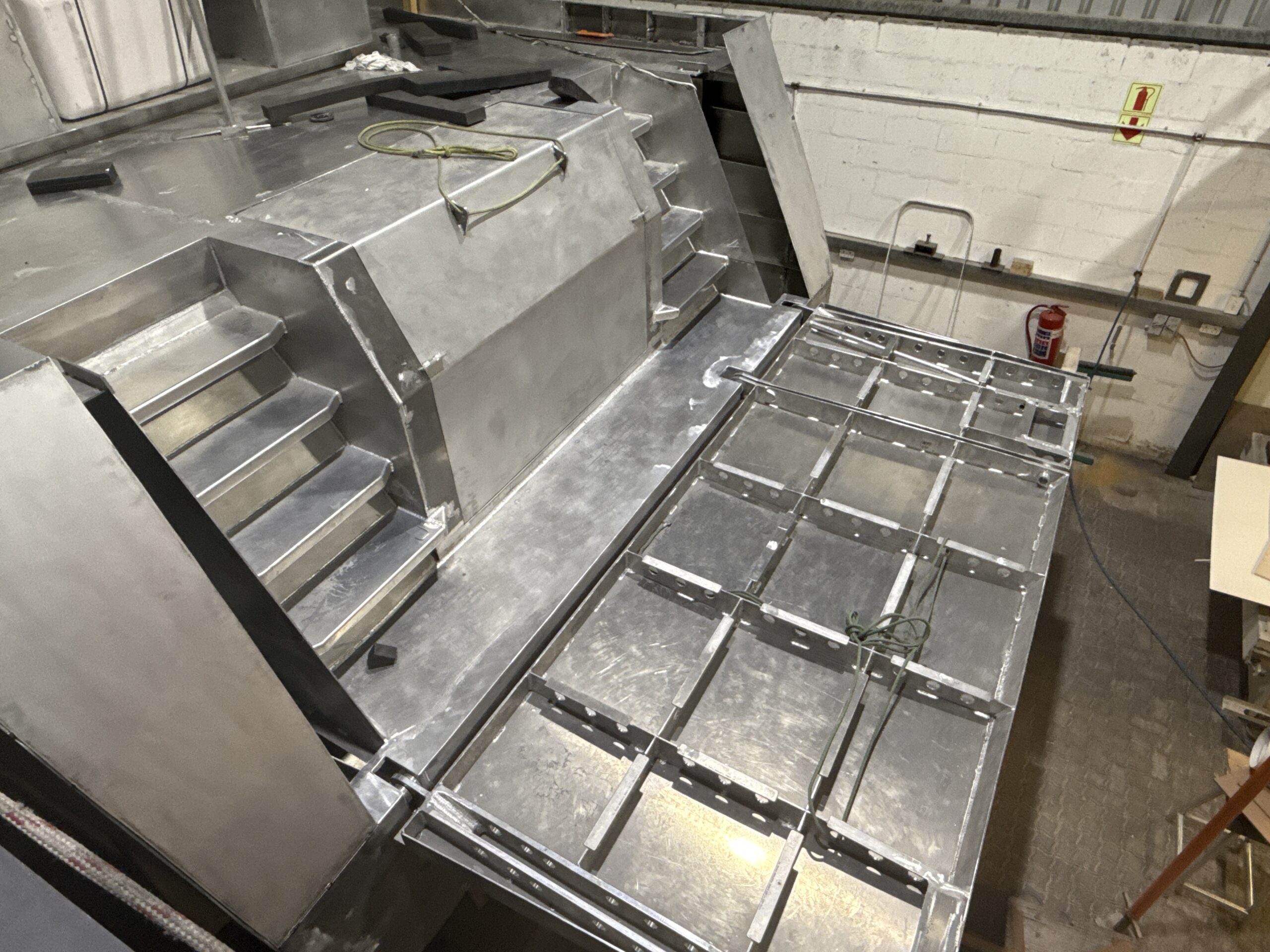
The material choice matters. Askari Yachts builds in aluminium, and for Du Toit Yacht Design, that decision opens up a very particular way of thinking about the vessel from the earliest concept stage. Aluminium is not simply a construction material. It influences how the yacht is designed, engineered, detailed, built, fitted out and ultimately lived aboard.
A material suited to serious customisation
One of aluminium’s greatest advantages is design flexibility. For custom and semi-custom yachts, this is especially valuable. In composite yacht building, plugs, moulds and tooling are highly effective for repeat production, but they can add cost, time and design rigidity to one-off or limited-run projects. This is not a criticism of composite construction, which remains an excellent solution for lightweight, high-quality production yachts and performance-focused designs. The point is that aluminium offers a different set of advantages where customisation, repairability and limited-run flexibility are central to the brief.
Aluminium changes that relationship. Instead of designing around a fixed mould, the design can move more directly from digital modelling into plate cutting, structural fabrication and assembly. This does not mean that changes are casual or simple. Every adjustment still has implications for structure, weight, balance, systems and production. But it does mean that layout, lifestyle and cruising intent can be considered in a highly practical way.
That philosophy is central to the Askari 65. The vessel features a beautifully designed hull that accommodates four ensuite cabins, including a spacious master suite and a second cabin with the proportions and privacy to serve as an additional master suite. The result is a long-range cruiser that combines practical passage making capability with the comfort and refinement expected of a modern luxury yacht.

Where design and engineering meet
For Du Toit Yacht Design, aluminium construction fits naturally into a holistic design process. The studio’s work spans naval architecture, exterior design, structural design and detailing, interior architecture, and the coordination of key systems interfaces with the builder and specialist suppliers.
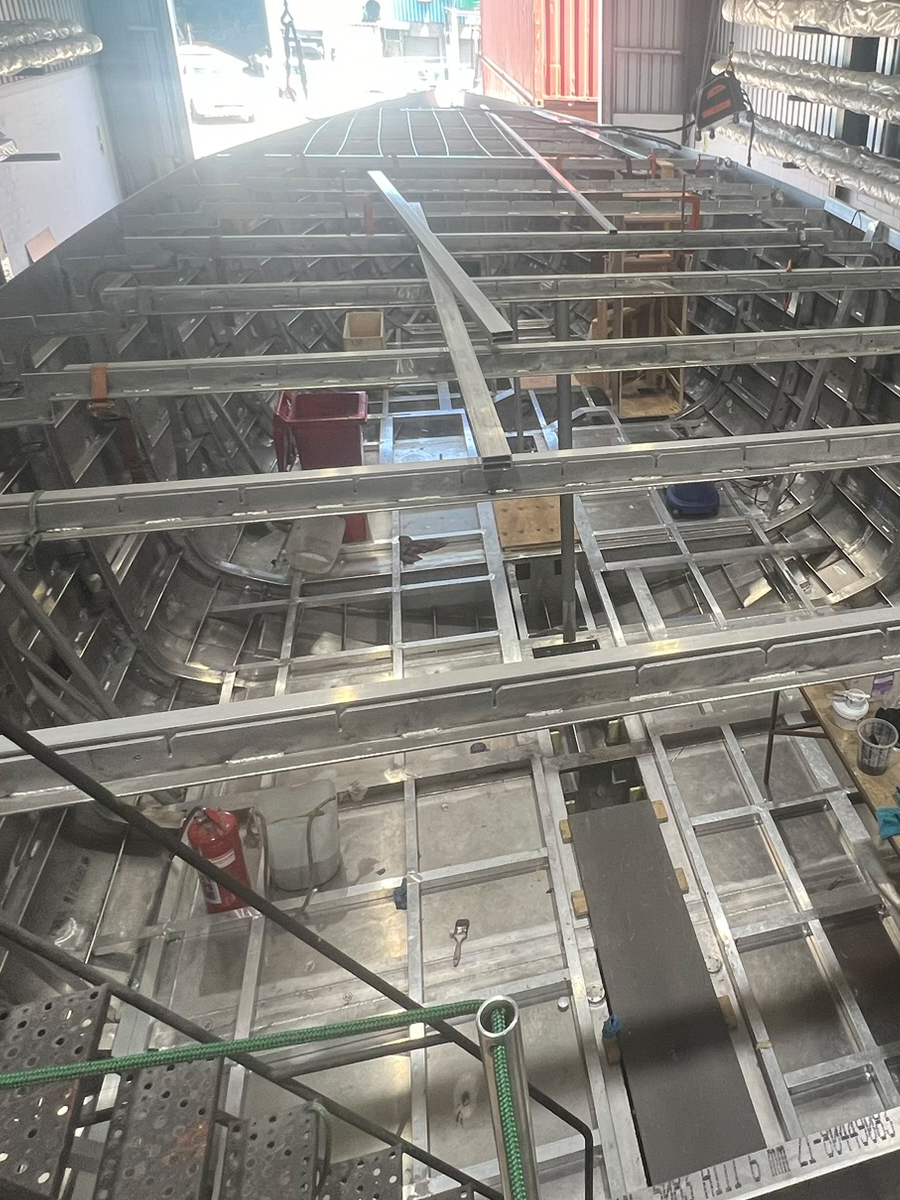
This integrated approach means that structure, systems coordination and interior design are considered together, rather than treated as separate layers added later. This becomes especially important on an aluminium vessel. Plate thickness, framing, bulkheads, weld sequencing, tank locations, machinery spaces, service access, insulation, sound control, coatings and interior attachment points all need to work as one system.
A yacht is not just a hull with a beautiful interior inside it. It is a moving structure, a home, a machine and an offshore platform.
On the Askari 65, full standing headroom throughout, including in the engine room, is more than a comfort feature. It reflects the value of designing for long-term ownership, maintenance access and real use at sea. When a vessel is intended for extended cruising, access to systems is not a luxury. It is part of safe, sensible yacht design.
Durability, repairability and responsible material use
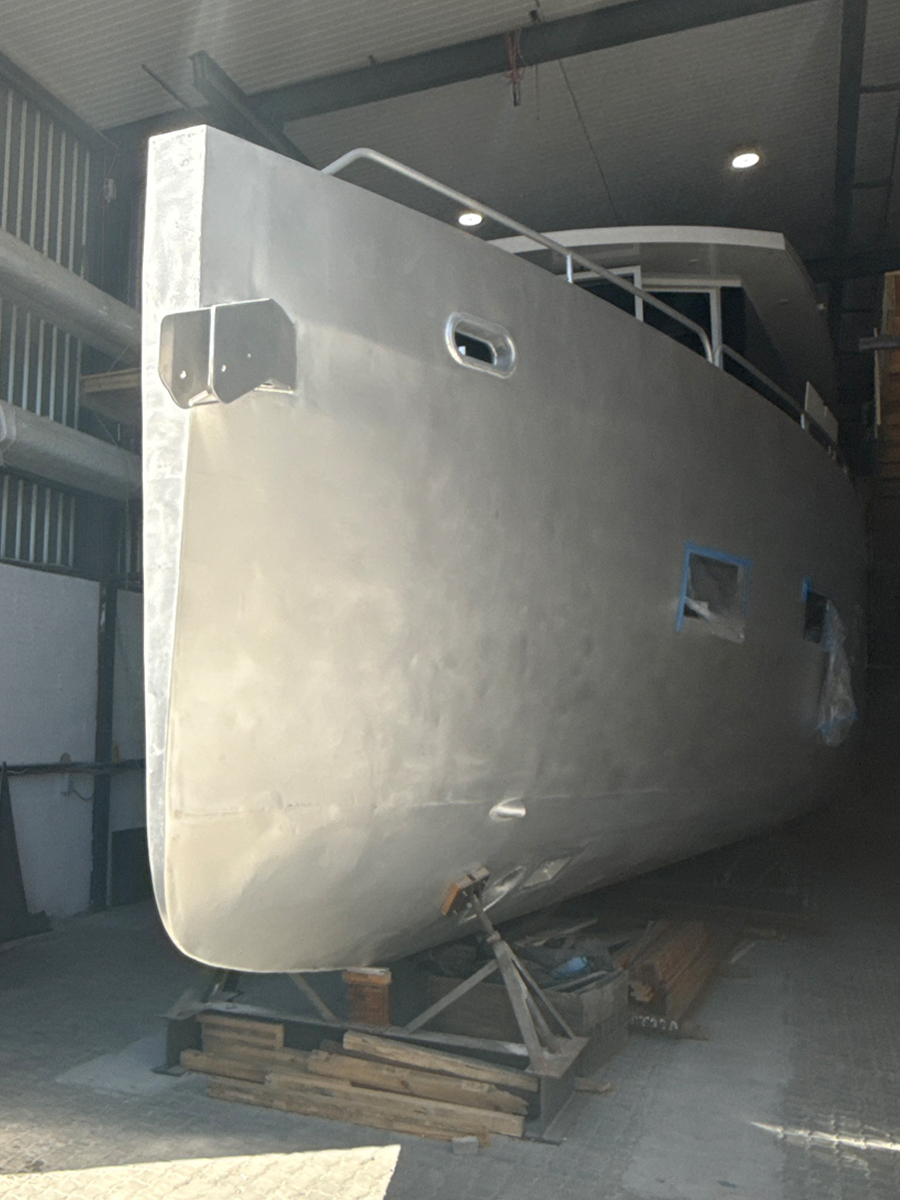
Aluminium is valued in marine construction for its strength-to-weight ratio, corrosion resistance and durability. The hull and structural plating are specified in marine-grade aluminium selected for corrosion resistance, weldability and long-term durability in a seawater environment.
It does not rust like steel, and when properly specified, protected and maintained, it is highly suited to demanding marine environments. It does, however, require good design discipline. Dissimilar metals must be isolated, coatings and drainage need to be properly considered, and details around fasteners, fittings and electrical systems need careful attention.
This is where experience matters. Aluminium construction rewards designers and builders who understand the material deeply. Poor detailing can create problems, but good detailing can produce a vessel that is robust, repairable and capable of a very long working life.
There is also a sustainability argument, although it should be made honestly. Primary aluminium production is energy intensive, so aluminium is not a simplistic “green” answer. Its strength lies in longevity, repairability and recyclability. When a yacht is designed for a long service life, can be maintained and repaired, and uses a material with an established recycling pathway, the environmental discussion becomes more meaningful than a simple comparison of materials at launch.
For yachts designed to last, this matters. At the end of a vessel’s life, aluminium hulls and structural components can potentially be reclaimed and returned to the material stream, depending on the condition of the vessel and the recycling infrastructure available. In a marine industry increasingly aware of end-of-life considerations across all construction materials, aluminium offers a compelling alternative for certain custom and long-range vessels where longevity, repairability and recyclability are central to the brief.
From long-range cruiser to performance adventure catamaran
The Askari 65 is not the only aluminium yacht in the range. Du Toit Yacht Design has also designed the Askari 55 Performance Adventure Catamaran, the first of which is already in build. The Askari 55 is a 16.80m aluminium sailing catamaran with fixed keels, three flexible layout options, generous bridgedeck living space and an optional hybrid propulsion configuration.
It has been designed for serious offshore passage making, while still offering the comfort expected from a modern bluewater cruiser.
Together, the Askari 65 and Askari 55 show two different expressions of the same material philosophy. One is a long-range power monohull. The other is a performance adventure catamaran. Both use aluminium to support strength, customisation, long-term value and confidence at sea.
Designing for owners, not just for launch day
At Du Toit Yacht Design, the value of aluminium lies not only in what it allows at the build stage, but in what it gives the owner over time. It supports vessels that can be adapted to a specific cruising programme, engineered for access and maintenance, and built with the structural integrity required for serious passage making.
As the first Askari 65 nears launch, it represents more than a new yacht entering the water. It demonstrates an approach to aluminium yacht design based on range, serviceability, structural integrity and practical long-term ownership.
For Du Toit Yacht Design, which is where the material becomes meaningful. Aluminium gives the design team the freedom to create yachts that are strong, individual and deeply practical, while still delivering the elegance, comfort and performance expected from a modern custom vessel.
Related Posts